
Competitive Analysis
Blink
Elizabeth Anderson
Application/Technology name: Blink
Purpose
Blink is an intranet application used for mobile and field workers. The application includes insights into employee productivity, “calendar management, content management, an employee directory, file sharing, and discussion forums”. Built in storage is also provided for “polices, job documents, and features ‘Workforce Analytics’ functionalities”.
Why is it relevant for the product that you are designing?
Blink is relevant to our platform as the social and analytical features can be used for volunteers. The Workforce Analytics can be used by incident commanders to track volunteer progress and could also be used for creating appropriate teams.
Release date:
April 3, 2013
Cost/Income for the company (if available):
Lowest pay tier is $3.40 per person per month.
Three most relevant features:
Workforce Analytics
Social: chat, announcements, recognition shout outs
File sharing
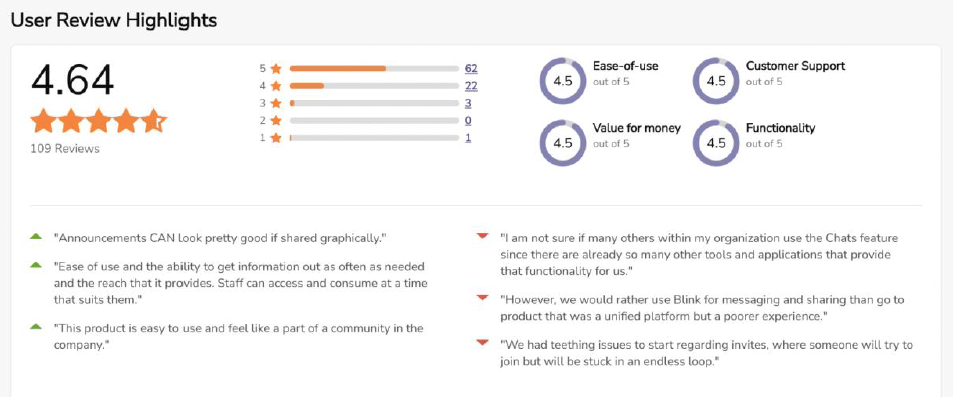
Customers’ reviews that are accessible online:
Heuristic usability evaluation:
Unable to do a heuristic usability evaluation as his application is only accessible via subscription.
Notes:
Workday
Mateusz Kosciuk
Application/Technology name: Workday Human Capital Management (Has various modules depending on need)
Purpose
This is a cloud-based website/mobile app with multiple modules depending on need. In this scenario, one of the main purposes of the app is the Human Resources aspect. It has things like employee evaluations, skills management, payroll/workforce management, time tracking, and more.
Why is it relevant for the product that you are designing?
The product we are designing is looking to include things like volunteer management and evaluations among other things, so it would be good to see how some applications out there currently work. These functions are similar to the HR arm of a standard company, which is why a tool like Workday is beneficial to look at.
Release date:
November 2006 is when the initial version of the Workday platform was released.
Cost/Income for the company (if available):
Cannot get accurate pricing, but based on research the software fees can cost $45-62 per employee and there is a minimum annual cost at around $275,000.
Three most relevant features:
Yearly Employee Performance Evaluations
Way to provide feedback to employees and rate their overall performance
Employee Skill and Experience Tracking
Built in tracker where you can list things like your Work Experience, Job History, or Certifications.
Similar to an online resume
Learning Plan
Include links to courses where you can learn more on various topics.
Customers’ reviews that are accessible online:
Seems to average around 4/5 stars in reviews
Pros
Customizable
A lot of integrations to third party apps
Pretty intuitive interface
Cons
No easy way to get pricing information
No free/trial version easily accessible
Depending on the module, it can get overwhelming for new users due to the sheer number of options available to them.
Heuristic usability evaluation:
Performing an evaluation based on personal experience with my employer’s implementation of the application.
Accessed via a website on a computer.
Due to there being personal and corporate information on these pages, I will not be including screenshot examples.
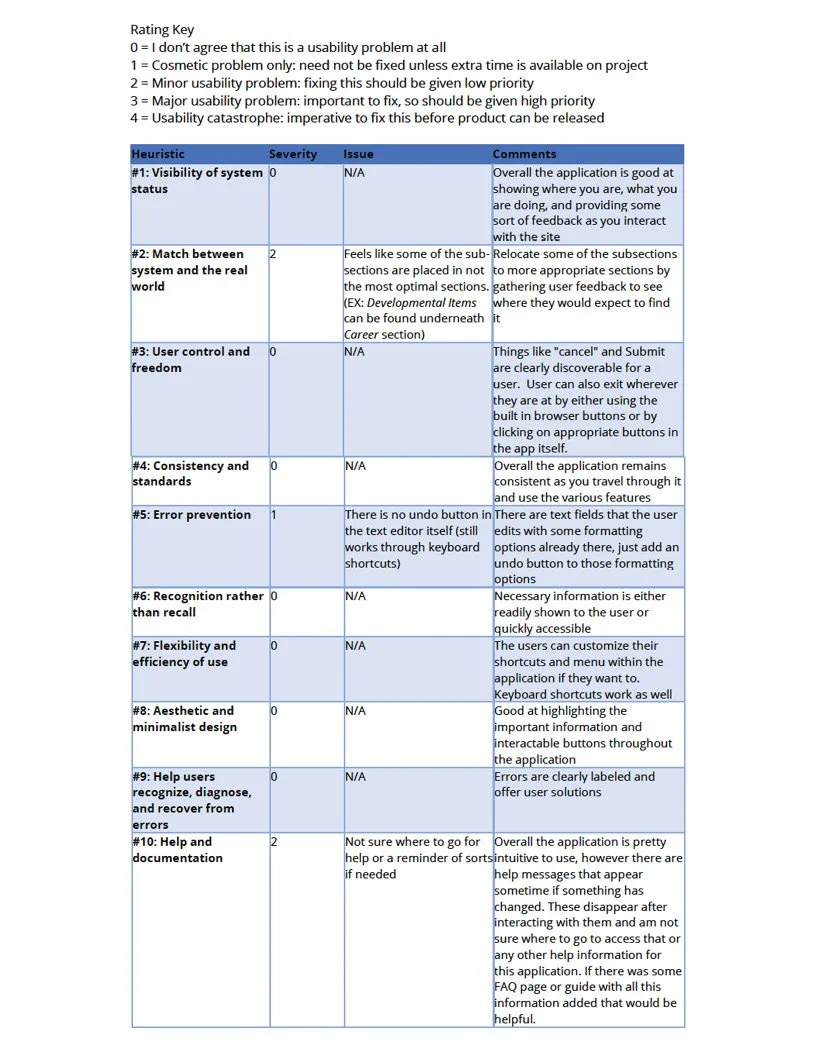
Workday Heuristic Usability Evaluation:
Prodigy EMS
Ryan Neal
Application/Technology name: Prodigy EMS
Purpose
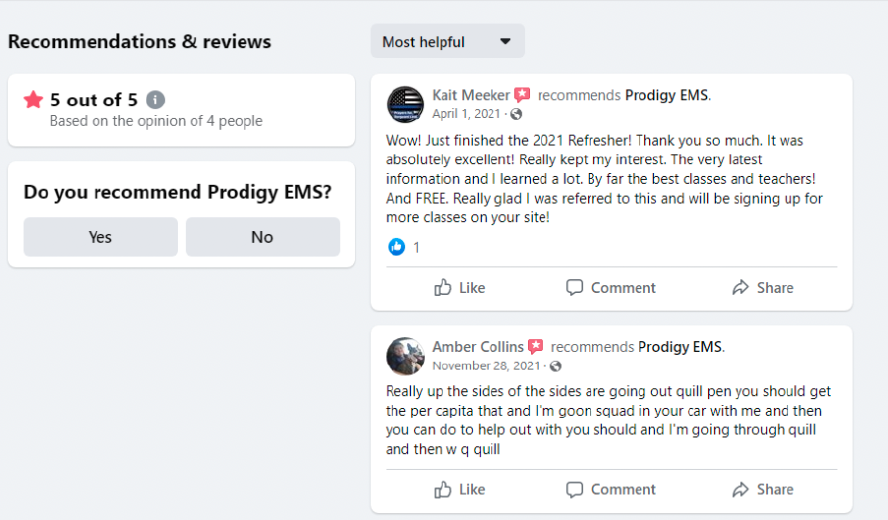
Prodigy is designed to educate and allow users to keep track of their certifications and allow an online platform for either recertifying or completing the necessary courses available to achieve new certifications.
Why is it relevant for the product that you are designing?
Prodigy is relevant for the product that we are designing because we want to learn more about the different formats available for our users to learn about different certifications and be able to train in a way for the real-life scenarios that they will face in the field.
Release date:
Late 2016
Three most relevant features:
Innovative Tracking
Certification Tracking
The class library and virtual instructors
Heuristic usability evaluation:
Unable to do heuristic usability evaluation because of having to sign up and pay for access to the online platform.
Notes
Inspire
Mateusz Kosciuk
Application/Technology name: Inspire Feedback & Recognition (Has various modules depending on need)
Purpose
This is a web-based experience made to provide real-time feedback to coworkers and employees to boost engagement and morale. Users can receive points, awards, badges, and even turn points in for rewards.
Why is it relevant for the product that you are designing?
The product we are looking to design will include things like providing feedback and recognitions for the people you work with, which is something that this tool does. It is interesting to look at the social aspect of this app as providing publicly visible positive reinforcement to coworkers can help push each other to excel when they are performing search and rescue operations.
Release date:
Software came out in 2012 and has been improved on since.
Cost/Income for the company (if available):
Cannot get accurate pricing without contacting them but based on research the software has a fee of at least $8.39 per user for each month, and companies need to sign up for contracts ranging from 1-5 years.
Check Out Our Performance Management Pricing For Leadership Growth (inspiresoftware.com)
Three most relevant features:
Provide recognition/feedback to coworkers
Let others know when they have helped you out or done a good job on something
Recognition and feedback received is visible to other people in the company
Get notifications when people are recognized and see it on a News Feed
Rewards
Can give people points when recognizing their achievements to spend on rewards for themselves
Customers’ reviews that are accessible online:
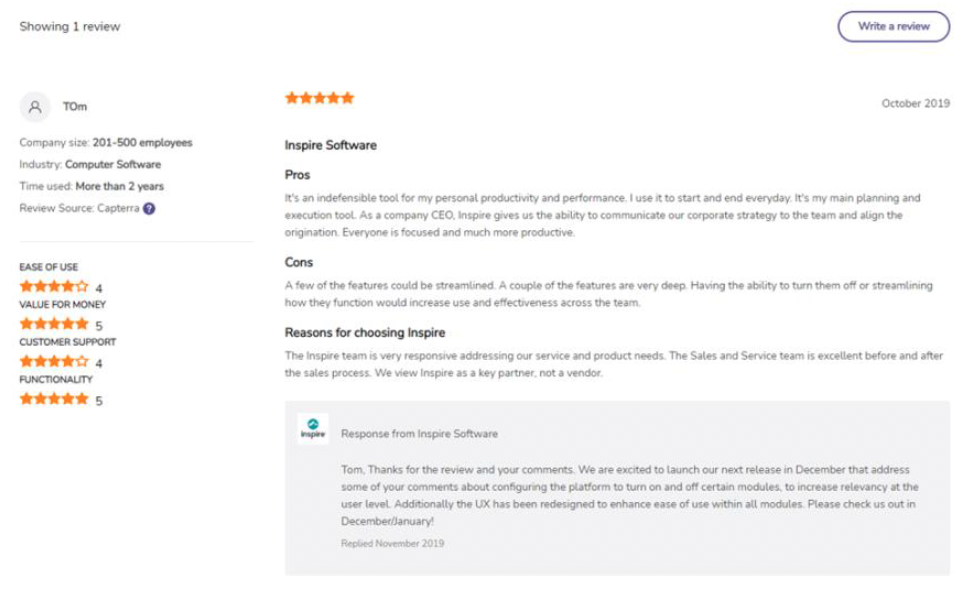
There does not seem to be a lot of reviews available for this specific Inspire software
There are more reviews for some other apps also called Inspire but they are not the same thing
The one user review I found gave it a 5/5
Heuristic usability evaluation:
Performing an evaluation based on personal experience with my employer’s implementation of the application.
Accessed via a website on a computer.
Due to there being personal and corporate information on these pages, I will not be including screenshot examples.
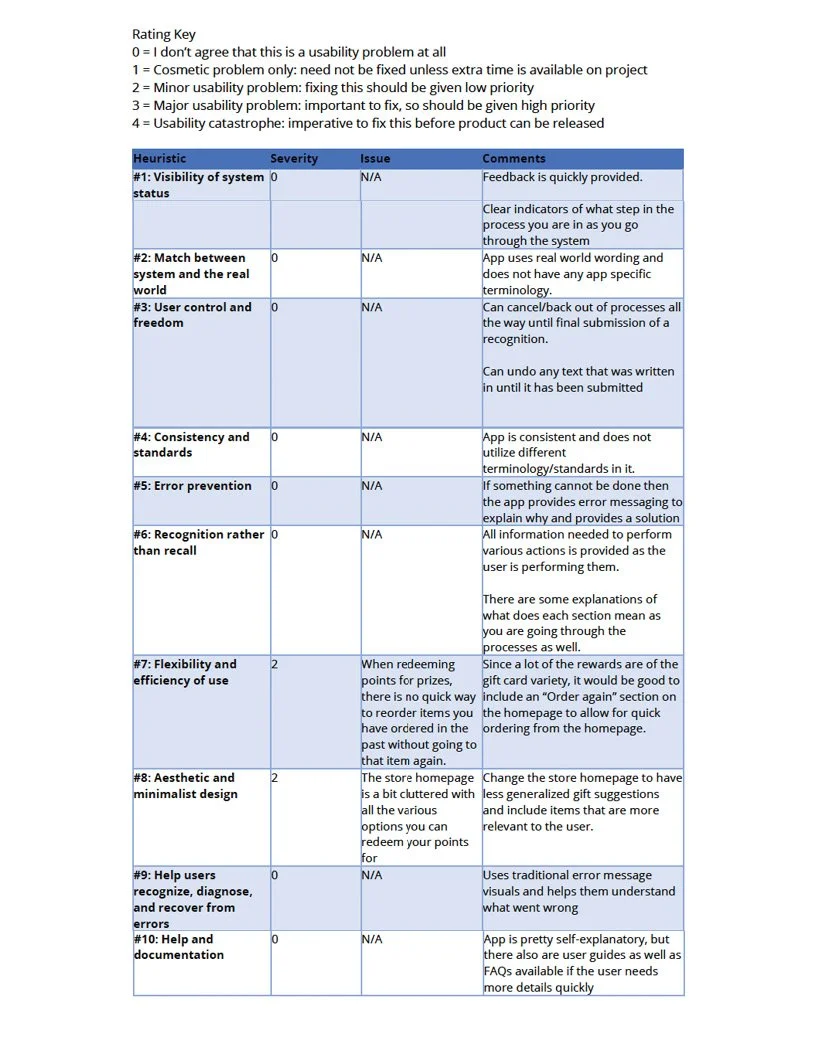
Inspire Heuristic Usability Evaluation:
D4H
Nimisha Thakur
Application/Technology name: D4H
Purpose
This is a web-based experience made to provide real-time feedback to coworkers and employees to boost engagement and morale. Users can receive points, awards, badges, and even turn points in for rewards.
Why is it relevant for the product that you are designing?
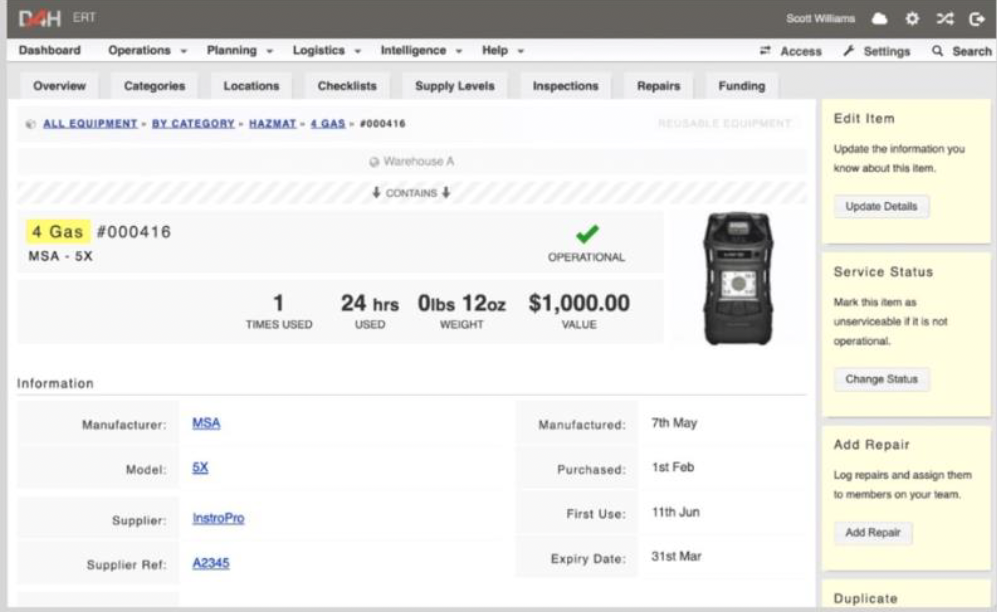
D4H is a cloud platform for emergency response. Their products are centered on the readiness, response, and re-evaluation phases of any rescue operation.
Readiness – easy to track certifications and paperwork with expectation management and automatic expiry alerts.
Response – helps in making faster decisions with sharable situation reports, GIS mapping, and real time collaboration.
Re-evaluation – Building a picture of your incidents across time, learning the patterns and trends that impact training and budgets.
Three most relevant features:
D4H is important to our platform since they, like us, are seeking to improve the effectiveness of the emergency response. This platform's features are similar to what we're attempting to develop for our dashboard.
d4h performs the following functions:
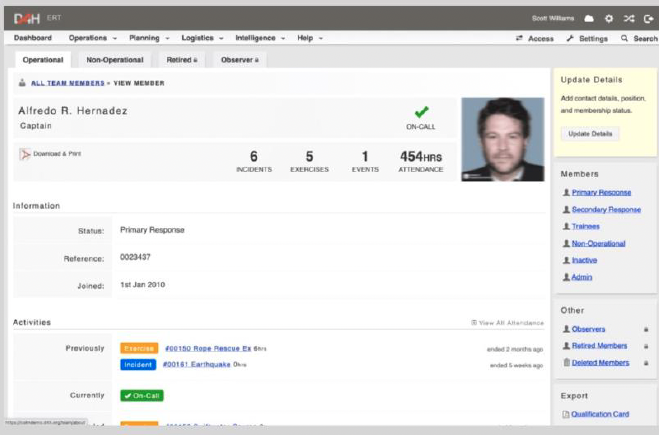
Member Profiles – building your own response team with experience, awards and history.
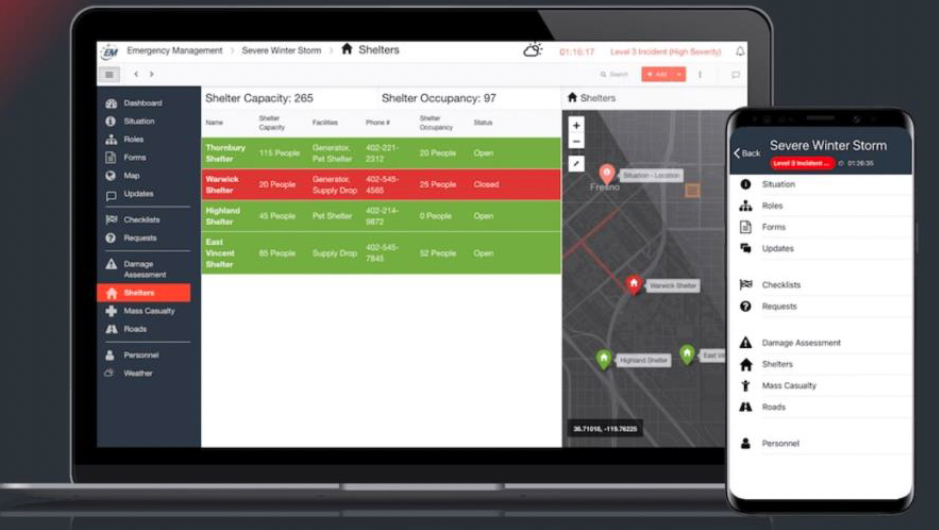
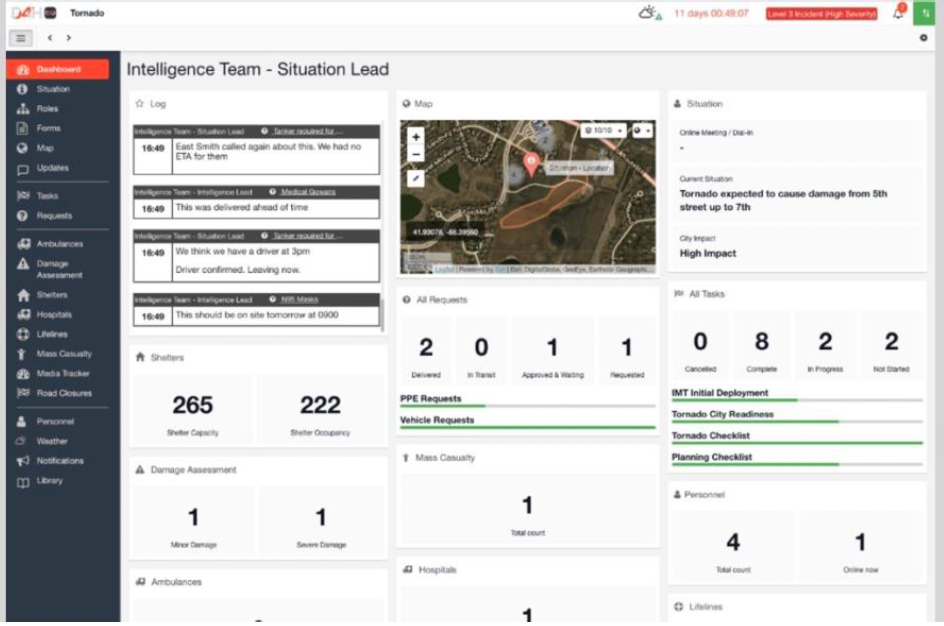
Document Library, attendance records, on call planner, training scheduler, equipment inventory, equipment barcodes
Checklists – creating tasks and checklists for each roles to follow in an emergency situation. Create pre plans, automate different checklists, and responses to each situation.
ICS forms, situation reports, status boards, activity logs.
Release date:
2008
Customer reviews that are accessible online:

Heuristic usability evaluation:
Unable to do a heuristic usability evaluation as his application is only accessible via subscription.
Notes: